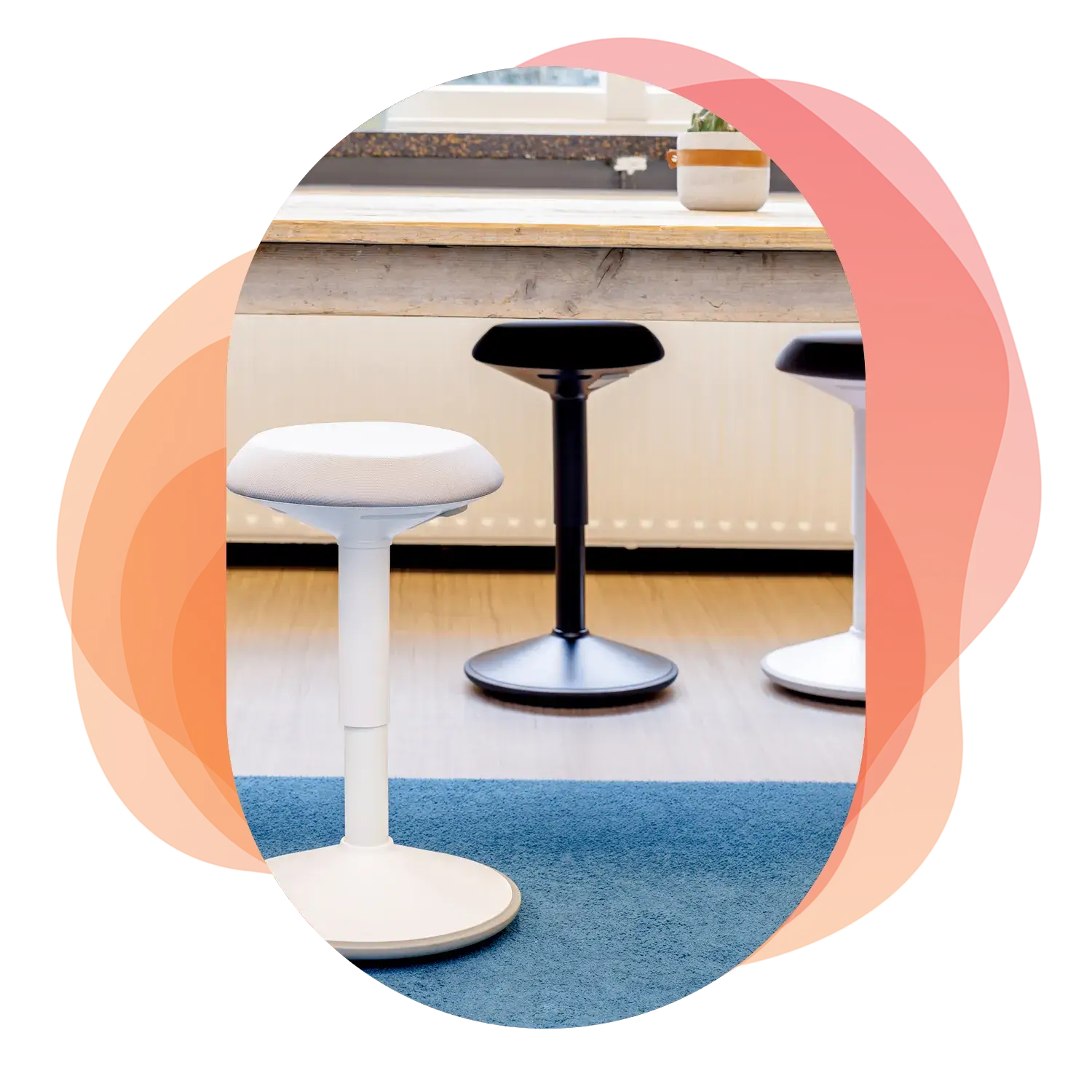

Office Chair vs Wobble Stool.
Which Is Better for Your Workday?
Sit Smarter. Work with More Energy. Feel the Difference.
Most people don’t think about how they sit.
They choose a chair. They sit down. They work for hours.
Until their energy drops. Until their back starts to ache.
Until focus becomes effort.
At Wobblez, we believe better work starts with better sitting.
Not by adding more support, but by encouraging more active sitting and natural movement.
Below, you’ll find an honest comparison between an office chair and a wobble stool, so you can decide what actually improves your workday.
Why your seating choice matters
The way you sit during the workday directly affects your posture, comfort, and long-term well-being. Many people spend 6 to 8 hours in the same position without realizing how little they actually move. Over time, prolonged static sitting can increase muscular fatigue and reduce natural posture variation.
Understanding the difference between an office chair and a wobble stool helps you make a more conscious choice. One that supports both your body and the way you work.
Office Chair vs Wobble Stool: The Key Differences at a Glance
When comparing an office chair vs wobble stool, the fundamental difference is stability versus movement.
Wobble stool
|
Office Chair
|
|
| Active Sitting | Continuous micro-movements & natural sitting position | Supports the body in a minimal to static position |
| Stable for desk work | ||
| Balance | Balance stool effect: Stable with controlled movement | Full support, designed for stability |
| Suitable for long workdays | More energetic and sharper during the day | Comfortable at first, often tiring during longer sitting periods |
| Posture awareness | ||
| Lower back comfort | Postural changes reduce back pain from sitting and stimulate core muscles | Maintains fixed posture, increases long-term strain |
| Price |
€ A smart investment in ergonomic seating |
€€ Often more expensive |
Why movement makes the difference
The real difference between an office chair and a wobble stool lies in the movement it promotes, reducing prolonged static loading on the lower back.
An office chair supports your body. But support often means sitting fixed.
And prolonged stillness slowly drains energy. Not immediately. Not dramatically. But gradually. Every single day.
A wobble stool works differently. It allows subtle, continuous movement while you work and encourages active sitting. Small posture adjustments keep your body engaged without distracting your focus.
That difference may seem small.
But over a 6–8 hour workday, it adds up.
Many users notice that they:
- Stay focused longer
- Feel less stiff when standing up
- Have more energy left at the end of the day
Not because they work harder, but because their body works with them.

What Does Ergonomic Research Say About Active Sitting?
Ergonomic guidelines consistently highlight one key principle:
The issue isn’t just posture: it’s lack of variation.
Long periods of static sitting are associated with increased muscular fatigue and spinal compression.
Research in industrial ergonomics suggests that incorporating controlled movement into seated work may positively influence physiological responses such as circulation.
Frequent micro-adjustments and posture changes:
- Reduce continuous pressure on the lower back
- Lightly activate core muscles
- Improve circulation
- Lower the risk of stiffness
A wobble stool doesn’t force movement.
It invites movement. That distinction matters.
Source:
Effects of implementing an active sitting protocol compared to using a traditional office chair and standing workstation (2024, International Journal of Industrial Ergonomics)
When Is an Office Chair the Better Choice?
Good for comfort. Less so for dynamics.
An office chair can be the better option if:
- You prefer maximum structural support
- Your work requires minimal movement and high stability
- You need full backrest support
- You spend long periods sitting in a fixed posture
✅ Advantages of an Office Chair
- Provides immediate comfort and support
- Very stable and familiar
- Suitable static desk work
- No learning curve
⚠️ Limitations of an Office Chair
- Encourages limited movement
- Can promote a fixed sitting posture
- Focus and comfort may decrease during prolonged sitting without breaks
When Is a Wobble Stool the Better Choice?
Made to make your body cooperate.
A wobble stool may be the better choice if:
- You want to stay more active during the workday
- You experience stiffness after sitting
- You prefer movement over rigid support
- You value posture variation
✅ Advantages of a Wobble Stool
- Encourages active sitting through subtle, continuous movement
- Helps avoid prolonged static posture
- Promotes posture variation
- Keeps the body lightly engaged
- Stable enough for focused desk work when properly matched
⚠️ Limitations of a Wobble Stool
- Offers less passive backrest support
- May take a short adjustment period
- Choosing the right model matters
Still unsure if a wobble stool is the right fit for your body? Read: Is a wobble stool good for you.
Which option is right for you?
- Choose an office chair if you prefer maximum support and spend long periods sitting with little movement.
- Choose a wobble stool if you want to move more during the workday while maintaining comfort and concentration.
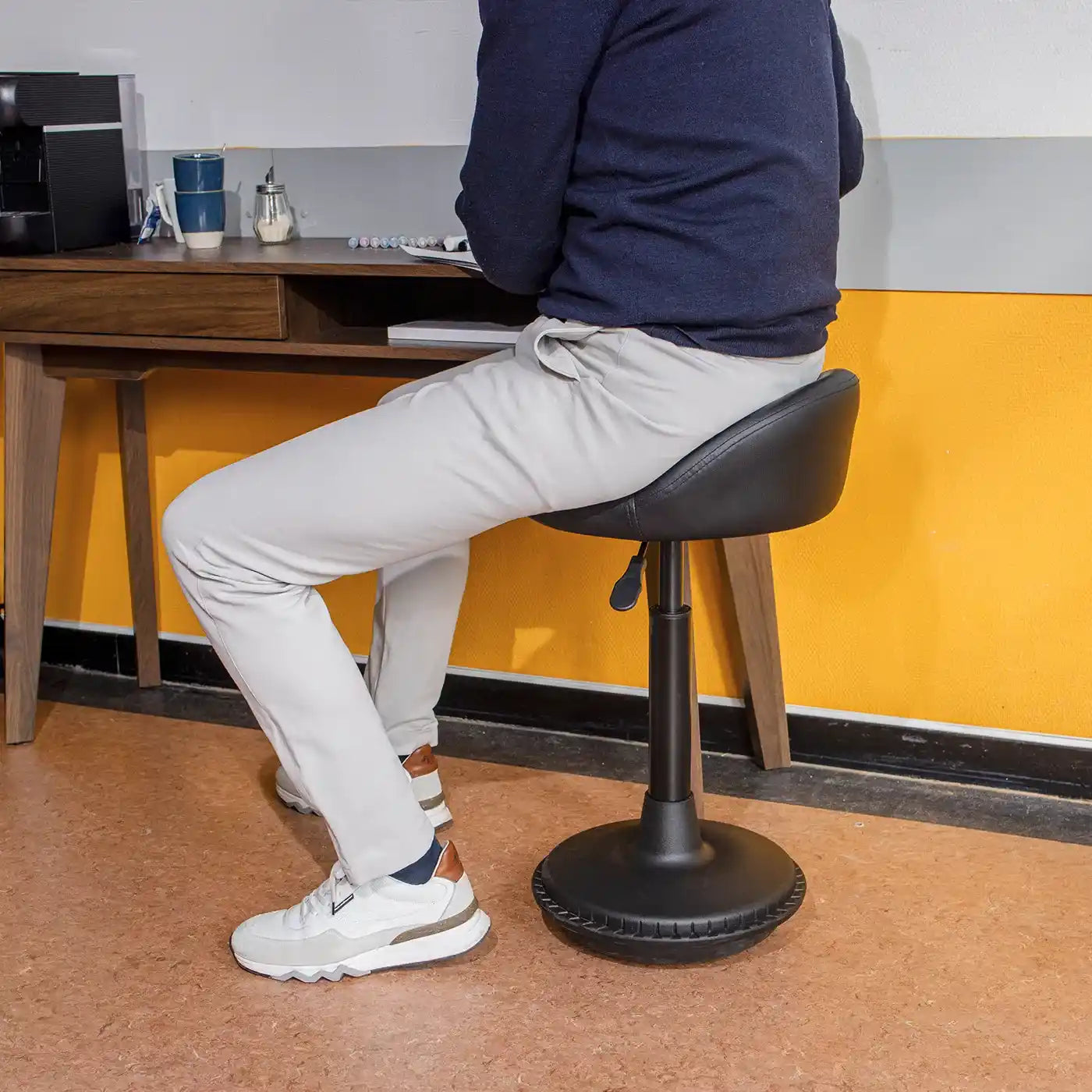
Can You Sit on a Wobble Stool All Day?
The short answer: yes, but variation is still essential.
Just like with an office chair:
- Alternating between sitting and standing is ideal
- Short walking breaks improve circulation
- Combining with a sit-stand desk works best
The goal isn’t to find one perfect posture.
The goal is movement.
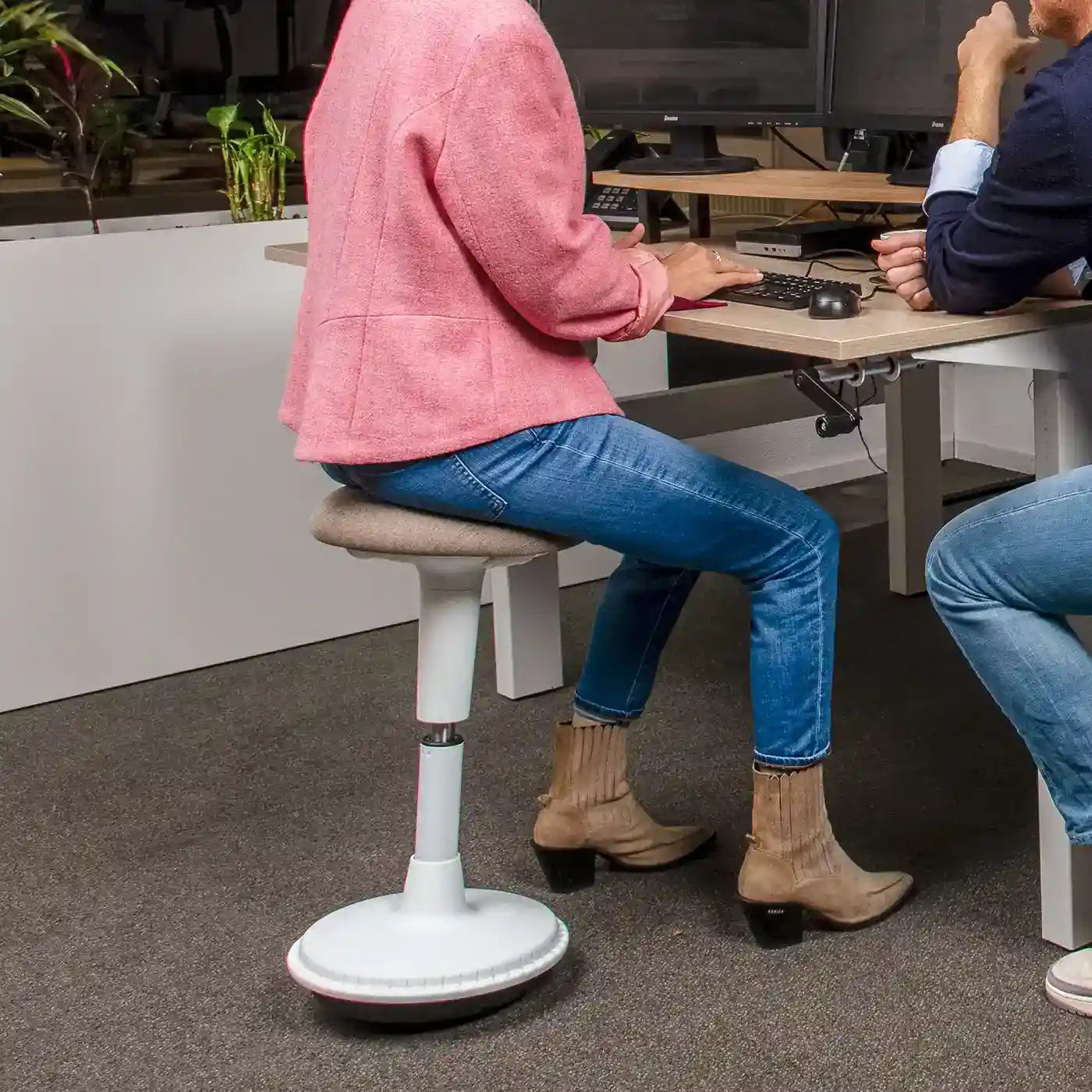
Wobble Stool vs Office Chair for Lower Back Pain
Lower back discomfort is often linked to prolonged static loading.
A wobble stool encourages regular posture changes, which can reduce constant pressure on the same spinal structures.
If you have diagnosed back conditions, individual medical advice is recommended.
However, for many people, discomfort comes from too little movement, not too little support.
Active Sitting vs Supported Sitting:
Which Matches Your Work Style?
For Remote Workers
Long laptop sessions often mean minimal movement.
A wobble stool promotes subtle movement throughout the day.
For Office Professionals
Meetings, typing, collaboration.
A combination of office chair + wobble stool + standing desk often works best.
For Creative Professionals
Designers, architects, and makers naturally shift positions.
Dynamic sitting supports that movement.
FAQ
Is a wobble stool better for your back?
Yes. A wobble stool promotes regular posture changes, a wobble stool reduces prolonged static loading. Many users report less stiffness and tension in their lower back.
What is better: an office chair or a wobble stool?
It depends on your work style. If you need maximum structural support and stability, an office chair may suit you.
If you want to stay active and energized while working, a wobble stool may be the better choice.
What is the real difference compared to an office chair?
An office chair supports your body. A wobble stool activates it and encourages active sitting. As a result, you naturally stay more in motion while you work.
Do I need strong core muscles to use a wobble stool?
No. The movement is subtle and your body adapts naturally over time. It’s best to start gradually and listen to your body.
Core engagement develops gradually over time.
Is a wobble stool suitable for all-day use?
Yes, a wobble stool can be suitable for all-day use, provided you alternate with standing or short movement breaks.
What if I’m still unsure which option fits me best?
Then this selection guide is perfect for you. Sitting time, movement preference and comfort needs differ from person to person.
In just half a minute, you'll see which ergonomic wobble stool best suits your workday: 👉 Help me choose (30 sec.)
Conclusion:
The Difference Is Movement
Many people think they need a better chair. Often, what they actually need is more movement.
Do you want maximum support?
Or do you want your body to stay engaged while you work?
In 30 seconds, you can find out what fits you best.
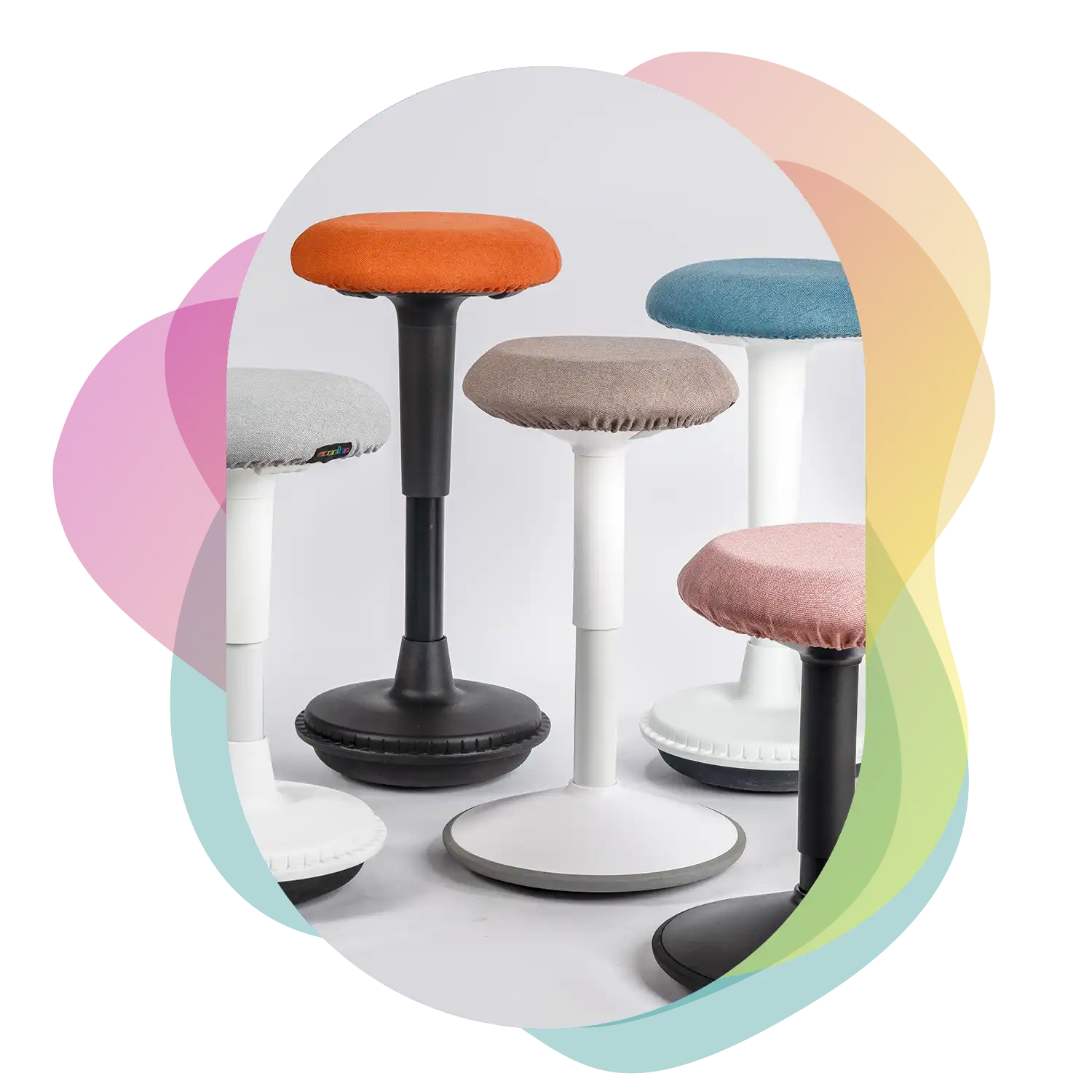
Meet the Wobblez


